
How we work
Facts first, then the story
Every episode starts as a fact sheet. Each number gets a source before anything is written, and the whole script is checked again before a word of narration is recorded.
Sources
Every claim in an episode has a source: an official history, a wartime record, a government report, or a first-hand account. The episode's page lists them all, linked wherever the source is online, with the page or table when there is one.
When sources disagree, we use the better-supported number or say that they disagree.
People's own words
The people who did the work tell a lot of each story, through oral histories, letters, diaries and wartime papers. We check every quote word for word against the original and name who said it and where it was recorded. Quotes from copyrighted interviews stay short and are credited to the person and the archive.
No invented witnesses, no composite characters, and no made-up dialogue.
Pictures and film
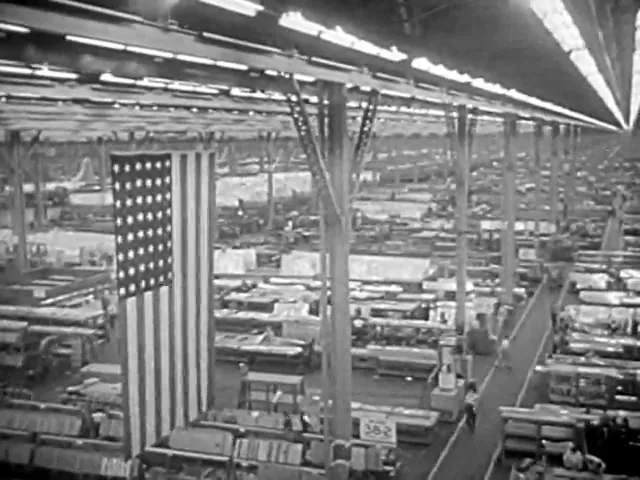
We use film and photographs made by the U.S. government during the war, mostly from the National Archives and the Library of Congress. We don't use copies sold by stock-footage resellers, even when the film underneath is public domain.
Labels say what a picture shows. When a film doesn't name the plant, or a photo doesn't name the workers, the label says that too. Each episode's page credits every picture in the order it appears.
The Shop Floor
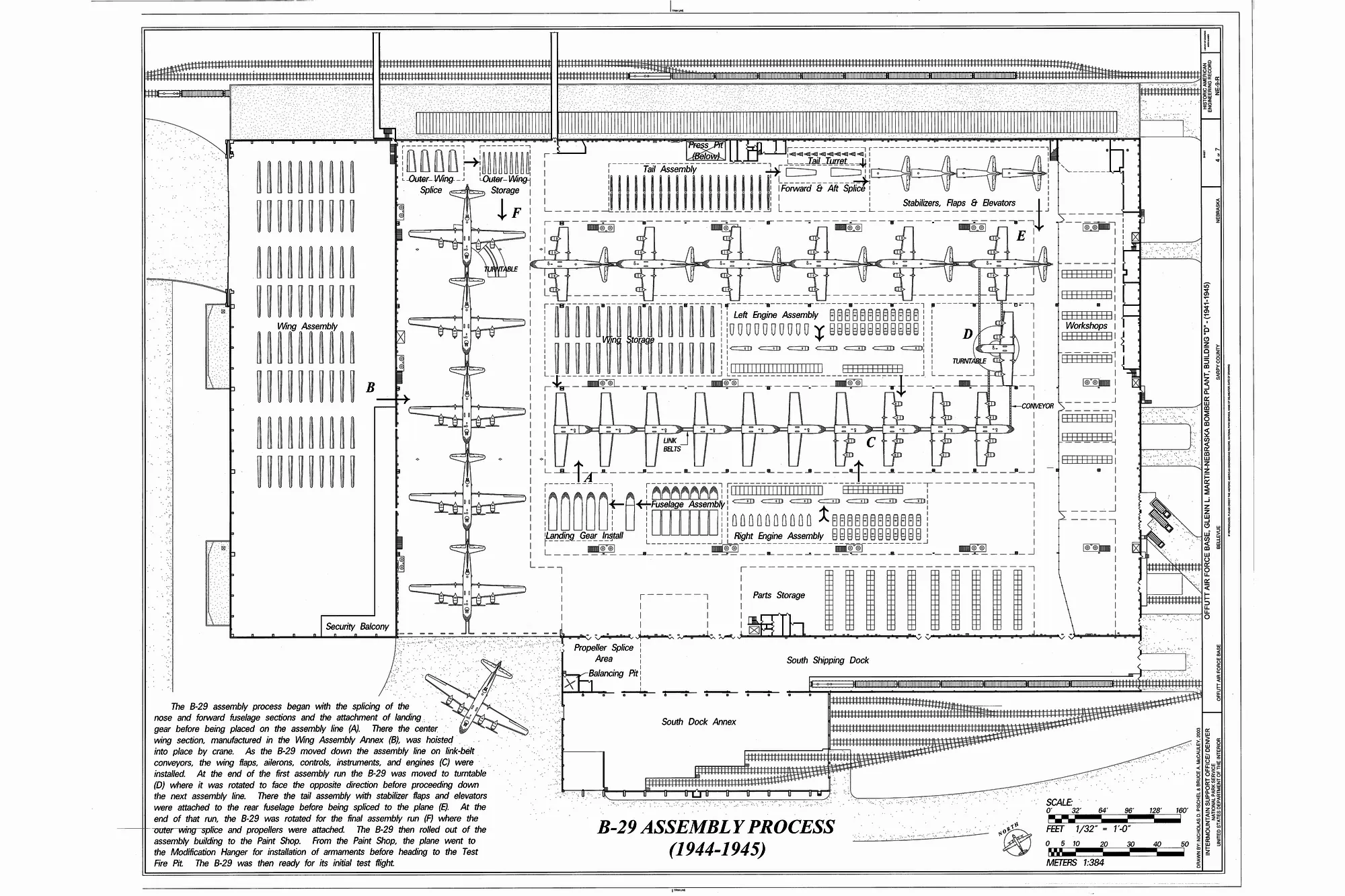
One or two segments in each episode are built on a real drawing: a sheet from the Historic American Engineering Record, the National Park Service's survey of historic industrial sites, or a wartime Army technical manual. We redraw it on screen line by line to show how the work was laid out, then bring up the original sheet.
Episode 1 uses sheet 4 of the survey of Building D in Omaha, where the Enola Gay was built.
AI
What we use it for
The narration is read by a synthetic voice made with ElevenLabs; the words are written and checked by us. AI-made pictures are rare and always carry a label on screen. Episode 1 has none.
Corrections
When we get something wrong
Email [email protected]. When we confirm a mistake, we fix the video's description and list the correction, with the date, on the episode's page.
Independent
The Factory Front is an independent channel. It is not affiliated with any manufacturer, museum or government agency.